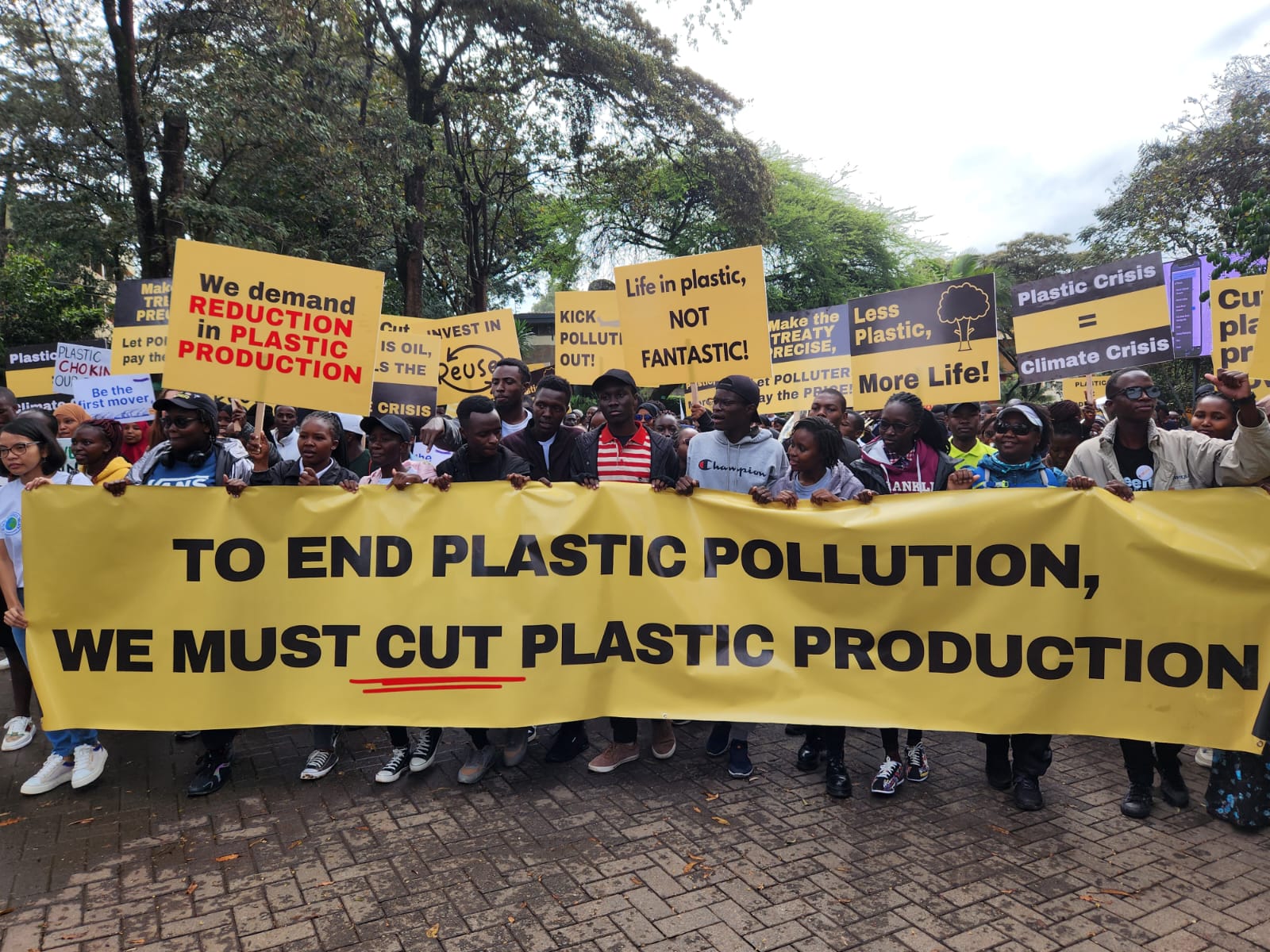
NAIROBI, December 1, 2025 — Members of the Civil Society and Rights Holders Coalition for a plastics treaty are calling on the Bureau of the Intergovernmental Negotiating Committee (INC) to ensure that the upcoming election of a new Chair marks a turning point in advancing negotiations toward a strong and ambitious plastics treaty.
In a letter addressed to the INC Bureau, 166 organizations acknowledged that the Bureau has a pivotal role in facilitating the election process for a new Chair. They also outlined key expectations for the next Chair’s leadership, including restoring trust, ensuring inclusivity, and guiding the process toward outcomes that are science-based and rooted in human rights, environmental health, and justice.
“The election of a new chair comes at a defining moment in the plastics treaty negotiations,” said Nadine Wahab, founder and CEO of EcoDahab and Director of Sustainable Network Egypt. “For too long, the process has been bogged down by obstructionism. The next Chair needs to ensure that the process is safeguarded from political interests, while also exercising fairness, transparency, and courage. These qualities are essential for fulfilling the UNEA-5/14 mandate for a legally-binding instrument that covers the full life cycle of plastics.”
The signing organizations shared six priorities for the new Chair, including ensuring meaningful participation from civil society and rights holders, safeguarding the independence of the INC, and protecting the integrity of the process from undue influence by vested interests. They also called for the application of all rules of procedure to enable voting when consensus cannot be reached, ensuring that the process does not continue to stall in the face of disagreement.
“The plastics crisis is at a breaking point. With studies showing the impact of plastics on our health and the environment, we cannot afford a weak or diluted treaty that allows producers to keep on manufacturing plastic,” says Salisa Traipipitsiriwat, senior campaigner and Southeast Asia plastics project manager at the Environmental Justice Foundation (EJF). “Landing the treaty that meets the crisis we’re in requires someone who understands that the process must be led by and for Member States, while also listening to the science and voices of affected communities — not the interests of the plastics industry. Transparency and accountability must be at the core of everything they do.”
The letter also underscores that civil society and rights holders remain ready to support the negotiations. They continue to be willing to act as a conscience and partner in achieving a treaty that addresses the plastic crisis along the entire lifecycle.
“We will continue to remind negotiators that the goal of this treaty can be nothing short of ending plastic pollution across the entire lifecycle,” says Dalia Márquez, Co-coordinator of the Women’s Working Group on Ending Plastic Pollution. “This treaty must protect people and the planet — not perpetuate the status quo.”
###
Media contact:
Cate Bonacini, press@ciel.org, +1-510-520-9109 (WhatsApp, Signal)